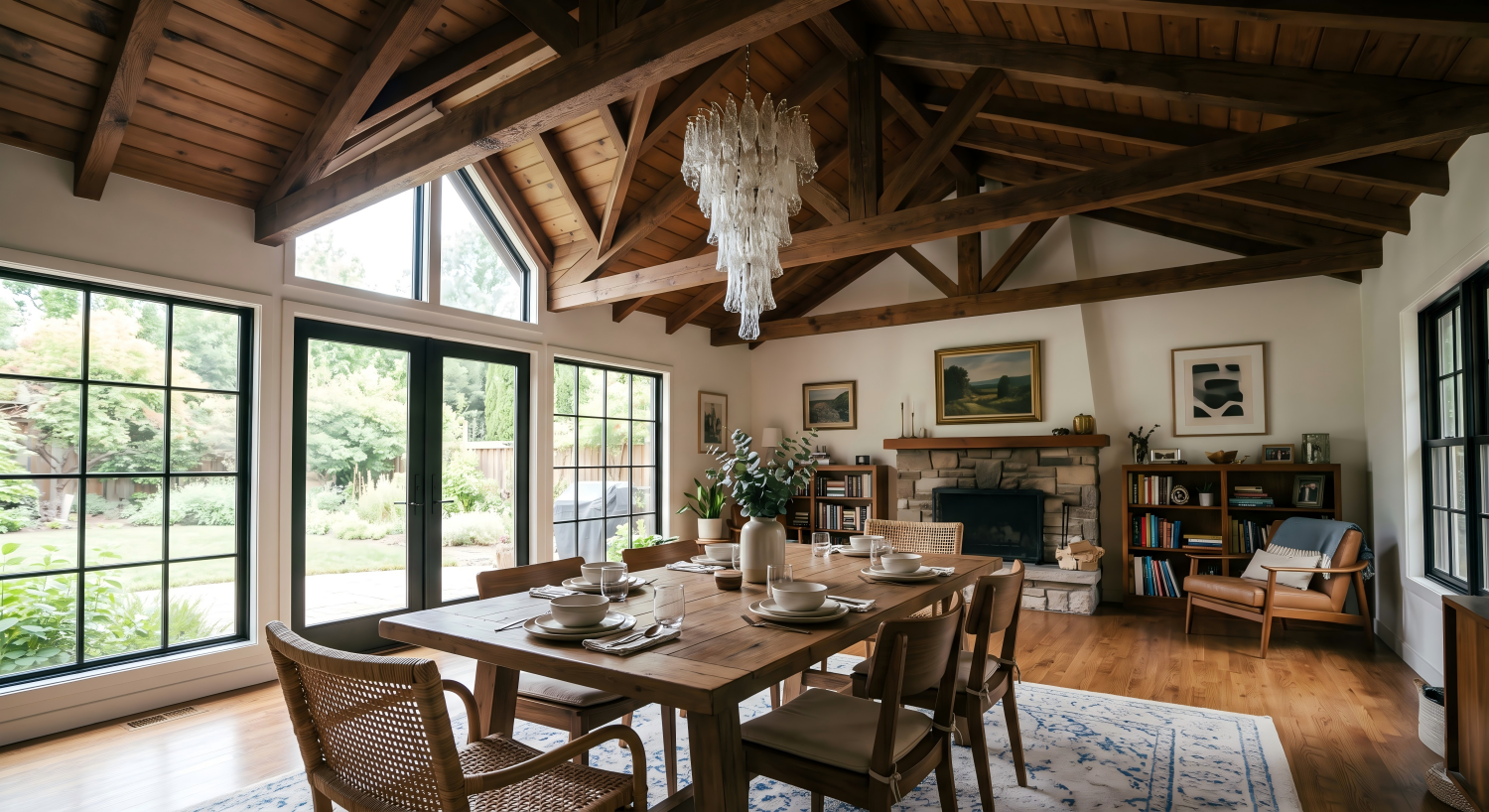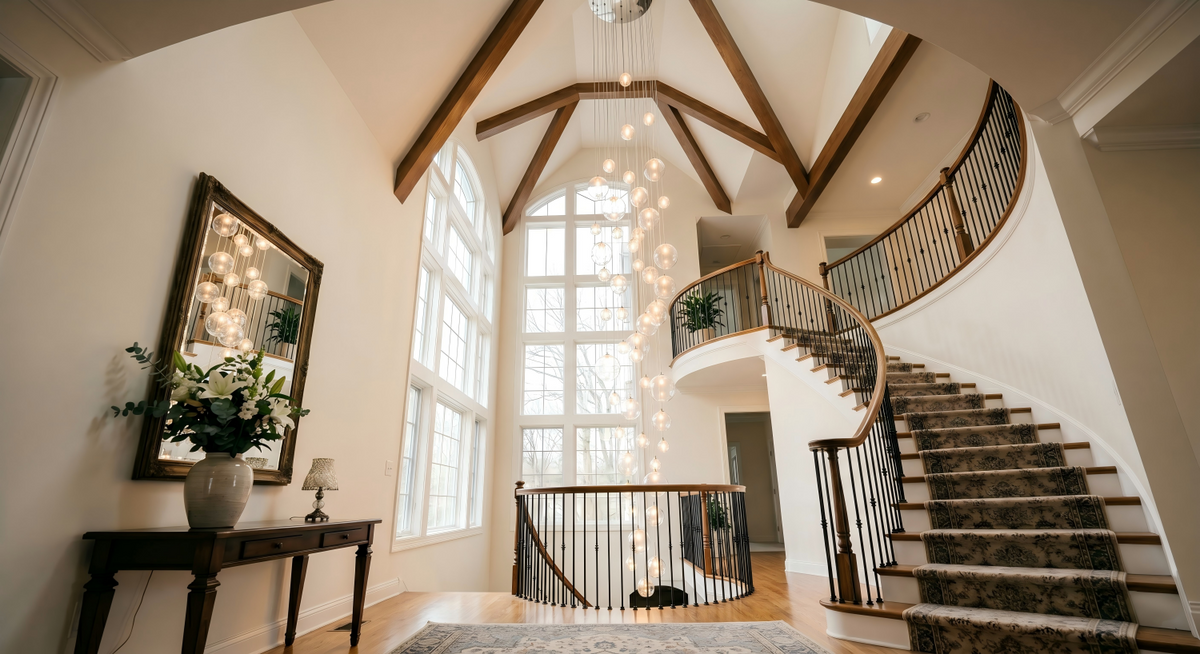

You did the research. You measured your room. You picked the perfect chandelier, waited for delivery, and had it installed. And then… something isn't quite right.
Maybe it looks bigger than you expected. Maybe it flickers every time you touch the dimmer. Maybe it's just not as bright as you hoped. Whatever the issue, the sinking feeling is the same: did I make a mistake?
Almost certainly not. The vast majority of chandelier "problems" are actually quick fixes — adjustments that take ten minutes, a $30 part swap, or just a shift in how you think about the fixture's role in your room. Here are the seven issues we hear about most often, and exactly how to solve each one.
In This Guide
- Problem 1: "My Chandelier Looks Too Big for the Room"
- Problem 2: "It Flickers When I Use the Dimmer"
- Problem 3: "It's Not Bright Enough"
- Problem 4: "It's Hanging Crooked or Off-Center"
- Problem 5: "Someone Might Hit Their Head on It"
- Problem 6: "A Glass Shade Broke"
- Problem 7: "It's Getting Dusty and I Have No Idea How to Clean It"
- When to Actually Call a Professional
Problem 1: "My Chandelier Looks Too Big for the Room"
This is the most common post-installation panic — and the one that's most often a false alarm. Chandeliers almost always look larger once they're hanging in your room than they did in product photos or in a showroom with 20-foot ceilings. Your eye needs a few days to adjust.
Before you do anything: wait 48 hours
Seriously. Give yourself two full days of living with it before making a judgment. Most people who initially think their chandelier is too large end up loving the scale within a week. A fixture that "fills" a room is doing exactly what a chandelier is supposed to do — anchoring the space and commanding attention.
If it still feels too large after a week
Raise it higher. Increasing the hanging height by 2–4 inches creates more visual breathing room between the fixture and the table or floor. This single adjustment solves the "too big" feeling in most cases without changing the fixture itself. With Aurorae chandeliers, this is a simple cable adjustment — loosen the canopy, wind a few extra inches of cable inside, and re-tighten.
Reduce visual clutter below. Sometimes the chandelier isn't too big — there's just too much competing for attention underneath it. Try removing the table centerpiece temporarily, simplifying place settings, or clearing the table entirely. If the chandelier suddenly looks right, the issue was visual density, not fixture size.
The cardboard test for next time. Before buying your next chandelier, cut a piece of cardboard to the fixture's listed diameter. Tape it to a string at the planned hanging height. Live with that cardboard circle for a day. It sounds silly, but it's the most reliable way to preview scale before committing.
If it's genuinely the wrong size
It happens. If the fixture diameter is significantly wider than the sizing formula recommends (room length + width in feet = diameter in inches), a return or exchange may be the right call. Our 30-day return policy exists for exactly this situation — unused and uninstalled fixtures can be returned for a full refund. And if you need help calculating the right size, see our Chandelier Size Guide.
Problem 2: "It Flickers When I Use the Dimmer"
Flickering is the single most reported "defect" for LED chandeliers — and in the vast majority of cases, it's not the chandelier at all. It's the dimmer switch.
Why it happens
Most American homes built before 2010 have TRIAC dimmers. These were designed for incandescent bulbs, which draw a steady, high current that TRIAC circuits handle easily. LED bulbs draw a tiny fraction of that current, and the TRIAC dimmer can't regulate such a small load smoothly. The result: visible flickering, buzzing from the switch, or the light not turning off completely at the lowest setting.
The fix: replace the dimmer switch (not the chandelier)
You need an LED-compatible dimmer. This is a $25–$60 part and a 15-minute swap for an electrician — or a DIY project if you're comfortable with basic wiring.
We've tested every Aurorae Lighting chandelier with Lutron dimmers and confirmed flicker-free, buzz-free performance with these specific models:
- Lutron Diva (DVCL-153P) — $25–$40. Physical slide dimmer. Reliable, simple, no app required.
- Lutron Caséta Wireless — ~$60. Smart dimmer with app control, compatible with Alexa, Google Assistant, and Apple HomeKit.
Both models handle the low wattage of LED chandeliers without any flickering. If you're having an electrician install a new chandelier, ask them to swap the dimmer at the same time — it adds only $50–$100 to the total job.
Quick diagnostic checklist
- Flickering only when dimmed (not at full brightness)? Almost certainly a dimmer incompatibility.
- Flickering at all brightness levels? Check that all bulbs are fully seated in their sockets. A loose bulb connection is the second most common cause.
- Flickering in one specific bulb position only? That individual bulb may be defective. Try swapping it with a bulb from another position on the same chandelier to confirm.
Problem 3: "It's Not Bright Enough"
You installed your beautiful new chandelier, turned it on, and the room still feels… dim. Before you assume the fixture is underpowered, check these three things.
Check 1: Is the dimmer at 100%?
It sounds obvious, but dimmer switches don't always reset to full brightness after installation. Some Lutron models default to a "favorite" setting that may be 60–70%. Push the slider all the way up or press the top of the rocker switch firmly to confirm you're at maximum output.
Check 2: Are you expecting too much from a single fixture?
Here's a truth that most lighting brands won't tell you: a chandelier was never designed to be the only light source in a room. Chandeliers provide ambient lighting — a warm, diffused glow that sets the mood and creates a focal point. They're not floodlights.
The professional approach is layered lighting — combining your chandelier with other sources:
- Recessed can lights in the ceiling for overall room brightness
- Wall sconces for perimeter warmth and depth
- Table lamps or floor lamps for task lighting in seating areas
- Under-cabinet lights in kitchens for countertop visibility
Your chandelier at 50–70% brightness, supplemented by two or three supporting light sources, will make the room look dramatically better than the chandelier alone at 100%. The layered approach adds depth, eliminates harsh shadows, and lets each fixture do what it does best.
Check 3: Are the bulbs the right type?
If your chandelier uses replaceable bulbs (most Aurorae fixtures do — E14, G4, G9, or E26 depending on the model; a few designs use integrated LEDs), the bulbs that came with the fixture are specifically selected for optimal performance. If you've replaced them with aftermarket bulbs, check two things: lumen output (should match or exceed the originals) and CRI rating (aim for 90+). A lower-CRI bulb can make a room feel dimmer even at the same lumen count because colors appear muted and flat.
Problem 4: "It's Hanging Crooked or Off-Center"
A crooked chandelier is visually maddening — your eye catches it every time you walk into the room. But the cause is usually simple, and so is the fix.
Crooked (tilting to one side)
Cable-hung chandeliers: Check that all cables are the same length from canopy to fixture. If one cable is slightly shorter than the others, the fixture tilts toward that side. Loosen the cable clamps inside the canopy and adjust until the fixture hangs level. A small torpedo level held against the fixture body confirms it's true.
Chain-hung chandeliers: Ensure equal chain links on all attachment points. Remove or add links one at a time until balanced.
Sloped ceiling: If your ceiling is angled and the chandelier isn't hanging plumb, the slope adapter may not be properly engaged. Aurorae chandeliers include a swivel canopy adapter — check that the ball joint is fully seated and the locking nut is tightened. The fixture should swing freely to find plumb regardless of ceiling angle.
Off-center (not aligned over the table)
This means the ceiling junction box isn't centered over your dining table. It's more common than you'd think, especially in older homes or rooms where the table was placed after the electrical was roughed in. You have two options:
- Swag hook method ($15–$30 DIY): Install a decorative hook in the ceiling directly above the table center. Run the chandelier's cable from the junction box to the hook, then down to the fixture. This creates a gentle arc of cable along the ceiling. It's a visible compromise, but it works.
- Move the junction box ($300–$500 with electrician): The clean solution. An electrician relocates the box to the correct position, patches the old hole, and you get a perfectly centered installation with no visible cable routing.
Problem 5: "Someone Might Hit Their Head on It"
If the chandelier is hanging too low, the fix takes less than five minutes.
The height rules
- Above a dining table: Bottom of the fixture should be 30–34 inches above the tabletop.
- In an open area (foyer, hallway): Bottom of the fixture should be at least 7 feet above the floor — higher if anyone in your household is particularly tall.
- Above a kitchen island: Bottom of the fixture 30–34 inches above the countertop surface.
How to adjust
Most Aurorae chandeliers are cable-hung with adjustable cable length; rod-hung models reach the perfect height through rods of different lengths instead. To shorten a cable-hung fixture:
- Turn off the power at the breaker (safety first — always).
- Unscrew or lower the canopy cover to expose the cable connections.
- Pull excess cable up through the canopy and coil it neatly inside the canopy cavity. Most Aurorae canopies have sufficient interior space to store 2–4 feet of excess cable.
- Re-secure the canopy against the ceiling.
- Restore power and verify the height.
Tip: have someone hold a tape measure from the tabletop up while you adjust. It's much faster than guessing, climbing down to check, climbing back up, and repeating.
Problem 6: "A Glass Shade Broke"
A cracked or broken glass shade doesn't mean the entire chandelier is ruined — it means you need one replacement part.
If it broke during shipping
Contact us immediately at info@auroraelighting.com with your order number and a photo of the damage. All Aurorae orders ship with free insured delivery on orders over $400. We'll ship a replacement shade at no cost — typically within 1–3 business days.
If it broke after installation
Accidents happen — a stray ball, an ambitious table centerpiece, an overzealous cleaner. Replacement shades for all Aurorae fixtures are available directly from us. Email info@auroraelighting.com with your product name and the number of shades you need. We keep replacement parts in stock for every current fixture.
Our 4-year warranty covers manufacturing defects including glass imperfections, LED driver failures, and structural issues. Accidental breakage isn't covered under warranty, but replacement parts are priced affordably — far less than replacing the entire fixture.
Temporary fix while waiting for a replacement
If one shade is broken and you're waiting for a replacement, it's safe to operate the chandelier with that position empty. Simply remove the broken shade and the bulb from that socket. The remaining shades will still illuminate the room — the visual asymmetry is noticeable but not dramatic, and it's completely safe electrically.
Problem 7: "It's Getting Dusty and I Have No Idea How to Clean It"
Dust happens. And a dusty chandelier doesn't just look neglected — it actually reduces light output. A thin layer of dust on glass shades can decrease brightness by 10–20% over time.
The easy method: dry dusting (monthly)
For regular maintenance, all you need is a clean, dry microfiber cloth. Turn off the chandelier and let it cool for 10 minutes (warm glass attracts dust faster). Gently wipe each shade while supporting it with your other hand to avoid putting stress on the attachment point. That's it. Five minutes, once a month, keeps your chandelier looking new.
Opal and frosted glass (like our Opal Glass Globe Chandelier) is the easiest material to clean — the smooth, non-porous surface doesn't trap dust in crevices the way cut crystal does. A single pass with a microfiber cloth restores full clarity.
The deep clean method (once or twice a year)
- Turn off and cool down — wait at least 15 minutes after turning off.
- Lay a thick blanket or towel on the table below — this catches anything you might drop and protects the surface.
- Dampen (don't soak) a microfiber cloth with a solution of warm water and a drop of dish soap.
- Wipe each shade individually, then immediately follow with a dry microfiber cloth to prevent water spots.
- Wipe the metal frame with a dry cloth only — avoid water on metallic finishes, as it can cause spotting on brass and gold finishes.
Never spray cleaning products directly onto the chandelier. Always apply to the cloth first. Spray mist can get into electrical connections and LED drivers.
What NOT to use
- No Windex or glass cleaners — the ammonia can damage metallic finishes and coatings on specialty glass.
- No abrasive sponges or rough cloths — they scratch glass and metal.
- No feather dusters — they redistribute dust rather than removing it, and the shaft can scratch fixtures.
When to Actually Call a Professional
Most of the problems above are DIY-friendly. But there are a few situations where professional help is the right call:
- Burning smell or discoloration around the canopy — this could indicate a wiring issue. Turn off the breaker immediately and call an electrician.
- The fixture feels warm to the touch after being on for 30+ minutes — LED fixtures should remain cool. Excessive heat suggests a wiring or driver problem.
- Flickering that persists after replacing the dimmer switch — if a new LED-compatible dimmer doesn't solve it, the issue may be in the home's wiring (a loose neutral wire is a common culprit in older homes).
- The junction box is pulling away from the ceiling — this is a structural and safety issue that needs immediate attention from a licensed electrician.
For all Aurorae Lighting fixtures, our customer service team is available to help diagnose issues before you spend money on a service call. Email us at info@auroraelighting.com with a description of the problem (photos help enormously), and we'll walk you through the most likely solution. Often, a 5-minute email exchange saves a $200 electrician visit.
Frequently Asked Questions
Why does my LED chandelier flicker when I dim it?
In the vast majority of cases, it's not the chandelier — it's the dimmer switch. Most homes built before 2010 have older TRIAC dimmers designed for incandescent bulbs, which can't smoothly regulate the much lower current that LED bulbs draw. The fix is an LED-compatible dimmer (a $25–$60 part). We've tested every Aurorae chandelier with the Lutron Diva (DVCL-153P) and Lutron Caséta and confirmed flicker-free performance with both.
How do I clean a chandelier without taking it apart?
For monthly maintenance, all you need is a dry microfiber cloth — turn the fixture off, let it cool, and gently wipe each shade while supporting it with your other hand. Once or twice a year, do a deeper clean with a barely-damp cloth (warm water and a drop of dish soap), followed immediately by a dry cloth. Never spray cleaner directly onto the fixture, and avoid ammonia-based glass cleaners on metal finishes. Opal and frosted glass is the easiest material to clean because its smooth, non-porous surface doesn't trap dust the way cut crystal does.
My chandelier looks too big — did I order the wrong size?
Usually it's an optical illusion, not a mistake. Chandeliers almost always look larger once they're hanging in your room than they did in photos, and your eye needs a few days to adjust. Live with it for 48 hours before judging. If it still feels too large after a week, raising the hanging height by 2–4 inches often solves it. If it's genuinely oversized for the room (wider than the room length + width in feet, measured in inches), our 30-day return policy covers unused, uninstalled fixtures for a full refund.
Can I replace a broken glass shade myself?
Yes. A broken shade doesn't mean the whole fixture is ruined — you just need one replacement part. Email us your product name and the number of shades you need, and we'll ship a replacement (typically within 1–3 business days). We keep replacement parts in stock for every current fixture. Our 4-year warranty covers manufacturing defects; accidental breakage isn't covered, but replacement shades are priced affordably — far less than replacing the entire chandelier. While you wait, it's completely safe to run the fixture with that one position empty.
Why isn't my chandelier bright enough?
First, check that the dimmer is at 100% — some dimmers default to a lower "favorite" setting after installation. Second, remember that a chandelier is designed to provide warm ambient light, not to be the only light source in the room. The professional approach is layered lighting: pair your chandelier at 50–70% with two or three supporting sources (recessed cans, wall sconces, table or floor lamps). This adds depth and makes the whole room look better than the chandelier alone at full brightness.